Gabapentin misuse and abuse carries real addiction risks you shouldn’t ignore, especially if you have a history of substance abuse or opioid use disorder, where 15-22% of patients misuse this medication. At high doses, it produces opioid-like euphoria and intense relaxation that mask its abuse potential. When you combine gabapentin with opioids, your overdose death risk jumps 49%. Understanding the warning signs and which states now regulate gabapentin can help protect your health.
Who’s at Risk for Gabapentin Misuse and Addiction?
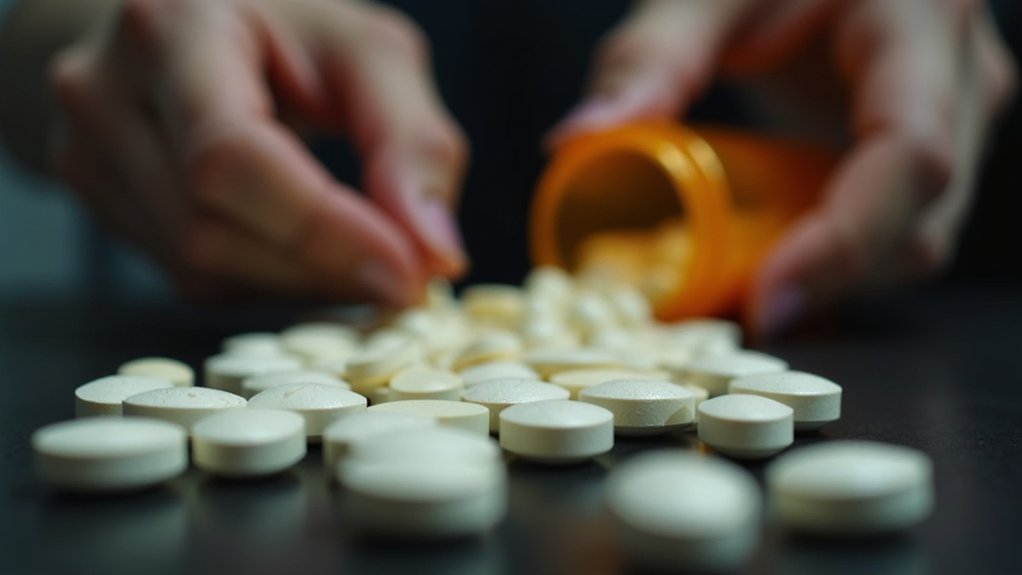
Several distinct populations face heightened risks for gabapentin misuse and addiction. If you have a HistoryOfSubstanceAbuse, you’re substantially more likely to misuse this medication. Research shows that opioid abusers exhibit 15-22% gabapentin misuse prevalence, while 43% of prescription opioid misusers also misuse gabapentin.
You face amplified risk if you’re managing chronic pain, as long-term patients often escalate doses seeking relief. Mental health conditions like anxiety, depression, and bipolar disorder also increase your vulnerability to misuse. Many individuals in these groups didn’t realize gabapentin could become problematic because of its PerceivedSafetyProfile as a non-controlled substance in many states. Users report subjective experiences reminiscent of opioids, benzodiazepines, and even psychedelics across various doses.
Injection drug users demonstrate particularly high rates, 43% report non-prescribed gabapentin use in rural areas. If you use methamphetamine or buprenorphine, your risk climbs further. Polysubstance use, especially combining gabapentin with opioids, benzodiazepines, or alcohol, creates dangerous interactions and heightens addiction potential.
Why Gabapentin Prescriptions Have Skyrocketed
You might wonder why gabapentin prescriptions have surged by 123 percent since 2010, making it the fifth most prescribed medication in the United States. The answer lies largely in off-label prescribing expansion, as clinicians began using gabapentin for conditions beyond its FDA-approved indications, including anxiety and sleep disorders. This growth accelerated when healthcare providers started seeking non-opioid alternatives during the overdose epidemic, positioning gabapentin as a perceived safer option for chronic pain management. With over 73 million prescriptions written in 2024 alone, gabapentin has become one of the most commonly dispensed medications in the country. The increase has been particularly notable among adults age 65 and older, who receive gabapentin at a rate of 114.7 prescriptions per 1,000 people, representing a 33.7% rise since 2016. A Malaysian study found that gabapentinoid prescriptions increased by 196.8% from 2010 to 2020 among opioid patients at a tertiary hospital, reflecting this global trend.
Off-Label Prescribing Expansion
Between 2012 and 2016, gabapentin prescriptions surged 64% in the United States, with dispensing reaching 69 million prescriptions by 2019. You should know that up to 95% of these prescriptions occur for off-label indications, including migraine, fibromyalgia, and mental health conditions. This dramatic increase made gabapentin the 10th most commonly prescribed medication in the country.
Marketing influence played a significant role in this expansion. Questionable marketing schemes drove prescription growth throughout the 1990s and 2000s, resulting in a $430 million settlement in 2004. Despite this, prescribers continued off-label practices based on colleague discussions rather than rigorous evidence evaluation. Parke-Davis specifically targeted residents and trainees to establish early familiarity with the drug and influence the prescribing habits of physicians they worked under.
Evidence quality issues compound these concerns. Reviews consistently show modest to no effect for many off-label uses, with findings limited to small, low-quality studies. Higher-quality research demonstrating nonefficacy is often ignored, raising serious questions about the risk-benefit balance given documented abuse potential. Contributing to safety concerns, analysis of poison control data found greater rates of moderate to major medical events when gabapentin was coingested with other drugs compared to gabapentin-only exposures.
Opioid Alternative Seeking
The opioid epidemic’s devastation prompted clinicians to search for safer pain management alternatives, and gabapentin emerged as a seemingly ideal candidate. CDC guidelines recommended gabapentinoids in place of opioids for chronic pain, driving prescriptions from 39 million in 2012 to 64 million by 2016, a 64% surge.
You should understand that this shift, while well-intentioned, overlooked gabapentin abuse potential. The question “can gabapentin be abused” wasn’t adequately addressed as prescribing expanded. Studies now confirm gabapentin is addictive for certain populations, with 15-22% of opioid use disorder patients misusing it.
Recreational gabapentin use has increased alongside accessibility, with 74,175 exposures reported to poison centers between 2013-2017. The perception of gabapentin as inherently safe contributed to widespread gabapentin abuse that paralleled its prescription growth. Medi-Cal data revealed that only 13% of beneficiaries receiving gabapentin had an FDA-approved diagnosis during the measurement year, highlighting the extent of off-label prescribing. The consequences became tragically apparent in Kentucky, where gabapentin appeared in about one-third of all drug deaths in 2016, prompting the state to become the first to classify it as a controlled substance.
The High Gabapentin Creates: Why People Misuse It
You might not expect gabapentin to produce a high, but research shows it creates subjective effects similar to opioids, benzodiazepines, and even psychedelics. If you have a history of substance use, you’re more likely to seek gabapentin specifically to enhance the effects of other drugs, co-abuse with opioids increases overdose death risk by 49%. Understanding why people misuse this medication helps explain the growing concern among healthcare providers about its abuse potential. When abused alone, gabapentin can produce experiences of euphoria, improved sociability, relaxation, or a “marijuana-like” high. Combining gabapentin with opioids or benzodiazepines is particularly dangerous, as it can lead to respiratory failure and extreme sedation. Research shows that patients prescribed both gabapentin and opioids face a 4-fold increased risk of respiratory depression, making this combination especially deadly. You might not expect gabapentin to produce a high, but research shows it creates subjective effects similar to opioids, benzodiazepines, and even psychedelics. If you have a history of substance use, you’re more likely to seek gabapentin specifically to enhance the effects of other drugs, co-abuse with opioids increases overdose death risk by 49%. Understanding why people misuse this medication helps explain the growing concern among healthcare providers about its abuse potential.When abused alone, gabapentin can produce experiences of euphoria, improved sociability, relaxation, or a “marijuana-like” high. Combining gabapentin with opioids or benzodiazepines is particularly dangerous, as it can lead to respiratory failure and extreme sedation. Research shows that patients prescribed both gabapentin and opioids face a 4-fold increased risk of respiratory depression, making this combination especially deadly. Awareness of gabapentin and tylenol interactions is also important, since although this pairing is generally considered lower risk than opioid combinations, all multi-drug use should be reviewed by a healthcare professional.
Opioid-Like Subjective Effects
When gabapentin is taken at doses exceeding therapeutic levels, it produces subjective effects that users describe as similar to opioid and benzodiazepine intoxication. You may experience euphoria, intense relaxation, and mood elevation that mirrors the high associated with controlled substances. High dose gabapentin activates multiple neurotransmitter pathways, creating pleasurable sensations absent at standard therapeutic amounts. When gabapentin is taken at doses exceeding therapeutic levels, it produces subjective effects that users describe as similar to opioid and benzodiazepine intoxication. You may experience euphoria, intense relaxation, and mood elevation that mirrors the high associated with controlled substances. High-dose gabapentin activates multiple neurotransmitter pathways, creating pleasurable sensations absent at standard therapeutic amounts. Understanding gabapentin effects on kidneys is also important, since impaired renal function can alter how the drug is cleared and increase the risk of toxicity.
The opioid-like effects include increased energy, talkativeness, and reduced social inhibitions. You’ll notice these responses intensify proportionally with dosage increases. Unlike therapeutic use, misuse triggers a distinct intoxication profile characterized by deep sedation and emotional relief beyond medical necessity.
These subjective effects explain why individuals with substance use histories specifically seek gabapentin. Research indicates that 15%-22% of people with opioid use disorder also reported gabapentin misuse, highlighting the significant overlap between these populations. The drug’s perceived low-risk status masks genuine abuse potential that warrants clinical vigilance. Overdose cases require supportive care treatment since no specific antidote exists to reverse gabapentin toxicity. The danger increases significantly when gabapentin is combined with other substances, as roughly 90% of fatal gabapentin-related overdoses also involve opioid use.
Substance Users Seek Enhancement
Because gabapentin produces sedative and euphoric effects at high doses, substance users actively seek it to enhance intoxication from other drugs. You should understand that 22% of individuals with opioid use disorder history misuse gabapentin alongside opioids, substantially increasing overdose risk. Substance misuse patterns show users combine gabapentin with opioids, alcohol, or benzodiazepines to amplify euphoria and bypass addiction treatment medications.
Research indicates gabapentin helps users stave off withdrawal symptoms while achieving altered mental states. This combination use dramatically elevates the danger of gabapentin overdose symptoms, including severe respiratory depression, extreme sedation, and coordination impairment. Repeated misuse accelerates dependence development, creating a cycle that’s difficult to break. You face compounded risks when gabapentin serves as an enhancement tool rather than a prescribed treatment.
Gabapentin’s Role in Opioid Overdose Deaths
Gabapentin’s presence in overdose deaths has risen sharply, with the medication detected in nearly 1 in 10 U.S. overdose deaths between 2019 and 2020. What happens if you take too much gabapentin alongside opioids can prove fatal, nearly 90% of deaths involving gabapentin also involved opioids. Your risk of opioid-related death increases by 49% with gabapentin co-exposure.
The data reveals troubling trends. Deaths with gabapentin detected doubled from early 2019 to late 2020. Illicit opioid involvement, particularly fentanyl, rose from 56.8% to 69.2% during this period. Combined CNS depression causes severe respiratory failure.
You should understand that withdrawal symptoms from gabapentin can complicate recovery, making supervised medical care essential when discontinuing use after prolonged exposure.
Warning Signs of Gabapentin Addiction

Beyond the grim overdose statistics lies another pressing concern: recognizing addiction before it reaches that point. You should watch for behavioral red flags like taking higher doses than prescribed, doctor shopping, or running out of medication early.
Recognizing addiction early means watching for warning signs like doctor shopping, increased doses, and running out of prescriptions too soon.
Physical warning signs include drowsiness, poor coordination, slurred speech, and blurred vision. You might notice psychological changes such as euphoria, mood swings, memory problems, or intense cravings.
If you’ve developed dependence, stopping abruptly can trigger withdrawal symptoms, anxiety, insomnia, nausea, tremors, and potentially seizures in severe cases.
Overdose indicators demand immediate attention: extreme drowsiness, slowed breathing, unresponsiveness, or bluish skin tint. Don’t dismiss these signs because gabapentin isn’t a traditional controlled substance. Early recognition allows intervention before consequences become life-threatening. If you’re observing these patterns in yourself or others, seek professional evaluation promptly.
Which States Classify Gabapentin as Controlled?
While the federal government hasn’t classified gabapentin as a controlled substance, several states have taken independent action to address mounting abuse concerns.
As of recent data, seven to eight states classify gabapentin as Schedule V, including Kentucky (since 2017), Tennessee, West Virginia (both 2018), Michigan (2019), Alabama, North Dakota, and Virginia. If you’re prescribed gabapentin in these states, your provider needs DEA registration, and prescriptions face stricter monitoring.
Beyond scheduling, 17 additional jurisdictions require PDMP reporting without Schedule V classification. States like Connecticut, Indiana, Massachusetts, Ohio, and New Jersey mandate that pharmacies report gabapentin dispensing to prescription drug monitoring programs. By 2024, approximately 25 jurisdictions had enacted either scheduling or reporting policies. You should verify your state’s current regulations, as requirements continue evolving.
Getting Help for Gabapentin Dependence
Understanding state regulations matters, but recognizing when you or someone you know needs help for gabapentin dependence is equally important. Treatment options vary based on dependence severity and individual circumstances.
Recognizing gabapentin dependence in yourself or a loved one is the critical first step toward finding appropriate treatment.
Evidence-based approaches include:
- Medical detoxification with gradual tapering under 24/7 supervision to prevent severe withdrawal symptoms
- Cognitive behavioral therapy (CBT) to identify triggers and develop healthy coping strategies
- Intensive outpatient programs allowing you to maintain work or school while receiving structured treatment
- Dual diagnosis care addressing co-occurring anxiety, depression, or other substance use disorders
You shouldn’t attempt abrupt discontinuation without medical guidance. Withdrawal symptoms can include insomnia, anxiety, and physical discomfort. Professional treatment programs offer extensive support through individual therapy, group sessions, and holistic approaches like mindfulness practices to promote sustained recovery.
Frequently Asked Questions
Can Gabapentin Withdrawal Cause Seizures Even in People Without Epilepsy?
Yes, you can experience seizures during gabapentin withdrawal even if you don’t have epilepsy. Medical records document cases of status epilepticus, a life-threatening seizure condition, in non-epileptic individuals who abruptly stopped high doses. Your risk increases markedly with higher dosages and sudden discontinuation rather than gradual tapering. You should always work with your healthcare provider to slowly reduce your dose, as this considerably lowers your seizure risk.
How Long Does Gabapentin Stay Detectable in Urine Drug Tests?
Gabapentin typically stays detectable in your urine for 1-4 days after your last dose, with most tests identifying it within 2-3 days. However, if you have impaired kidney function, this window extends considerably, severe renal impairment can push your half-life beyond 52 hours. Standard drug panels won’t detect gabapentin unless specifically ordered, and tests use cutoff levels between 1,000-2,000 ng/mL with approximately 99% reliability.
Is It Safe to Stop Gabapentin Suddenly After Long-Term Use?
No, you shouldn’t stop gabapentin suddenly after long-term use. Abrupt discontinuation can trigger life-threatening seizures, even if you’ve never had them before. You may also experience severe withdrawal symptoms like confusion, hallucinations, agitation, and suicidal thoughts, particularly if you’ve taken doses above 1800mg daily or used it for over six months. You’ll need medical supervision to taper gradually over weeks or months, minimizing these serious risks.
Does Gabapentin Interact Dangerously With Alcohol or Benzodiazepines?
Yes, gabapentin interacts dangerously with both alcohol and benzodiazepines. When you combine these substances, you’re amplifying central nervous system depression, which can cause severe sedation, impaired coordination, and respiratory depression. In serious cases, slowed breathing can become fatal. You’ll experience intensified drowsiness, dizziness, and cognitive impairment. If you have lung disease or take higher doses, your risks increase greatly. You should avoid these combinations and seek immediate medical attention if concerning symptoms develop.
Can Gabapentin Misuse Cause Permanent Nerve Damage or Cognitive Impairment?
You face real risks with long-term gabapentin misuse. Animal studies show chronic use can increase hippocampal neuron degeneration, while prolonged treatment may cause myelin protection to fail after just 15 days. You’re also vulnerable to lasting cognitive effects, 91% of long-term users report sedation, dizziness, and forgetfulness. Short-term memory loss and mental disorientation occur with higher doses. These findings suggest potential for permanent neurological harm requiring careful medical monitoring.