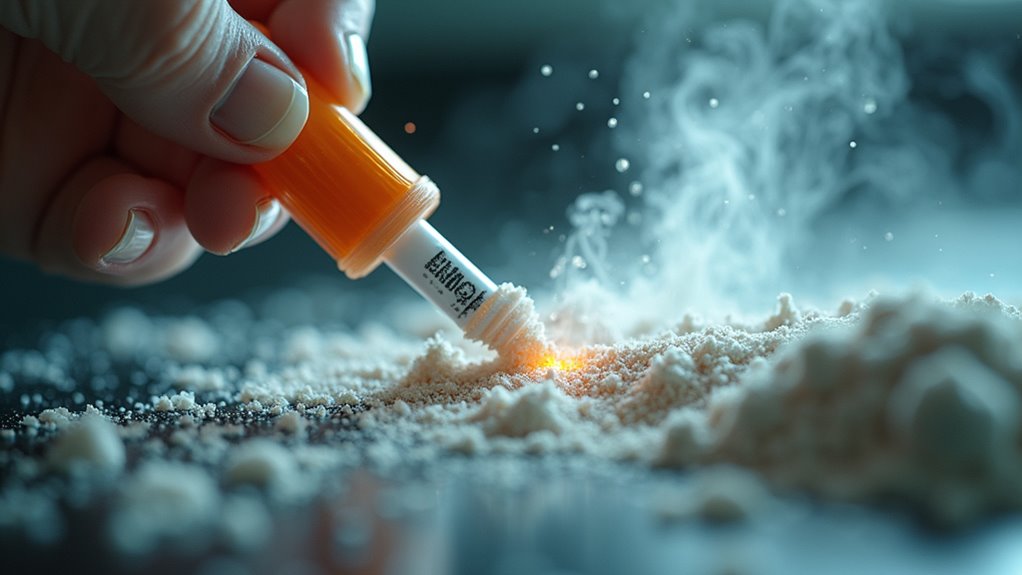
If you’re injecting Xanax, you’re facing immediate risks like overdose, respiratory depression, and death. Don’t quit cold turkey abrupt withdrawal can become life-threatening, and only about 5% of long-term users successfully stop without help. Instead, seek medically supervised detox, where clinicians monitor your essential signs and taper you safely. After detox, treatment options and dual-diagnosis care address any co-occurring anxiety. Keep going to learn how you can connect with the right support today.
Key Takeaways
- Injecting Xanax dramatically raises risks of overdose, respiratory depression, coma, and death, especially when combined with opioids.
- Never quit benzodiazepines cold turkey, as abrupt cessation after dependence can trigger life-threatening withdrawal symptoms.
- Medically supervised detox provides round-the-clock monitoring and gradual tapering, often using longer-acting benzodiazepines for safer withdrawal.
- Supportive medications like carbamazepine or clonidine may be used to reduce the severity of withdrawal symptoms.
- Post-detox care options include residential treatment, partial hospitalization, outpatient programs, and dual diagnosis support for co-occurring conditions.
Why getting help for Xanax injection matters

Getting help for Xanax injection matters because misusing this central nervous system depressant, especially by injection, dramatically raises your risk of overdose, respiratory depression, coma, and death. When you combine it with opioids, those risks climb even higher. Physical dependence can develop within just two to four weeks of regular use, so stopping abruptly on your own isn’t safe. Withdrawal can become life-threatening and requires medical supervision.
Getting help matters because only about 5% of long-term users successfully quit without structured support. A medically supervised program can taper you safely, manage withdrawal symptoms, and address the underlying issues driving your use. You don’t have to face this alone. Reaching out connects you with professionals who understand what you’re going through and can guide your recovery every step forward.
Why benzodiazepine withdrawal can be dangerous without supervision
Benzodiazepine withdrawal can quickly turn life-threatening when you stop abruptly without medical support. After just two to four weeks of regular use, your body develops physical dependence, even at prescribed doses. When you suddenly cut off the drug, your nervous system, once calmed by this depressant, becomes dangerously overexcited. You may experience severe psychological and physical harm during this period.
That’s why professionals don’t recommend quitting alone. Only about 5% of long-term users successfully stop without structured help. Instead, medically supervised detox lets clinicians taper your dose gradually, often replacing Xanax with a longer-acting benzodiazepine. Medications like carbamazepine or clonidine can also ease withdrawal severity.
With proper supervision, you’re protected from the worst outcomes, and you’re supported through a process that’s genuinely difficult to face alone.
Why you should never quit cold turkey

You should never quit cold turkey because stopping Xanax suddenly and completely is one of the most dangerous decisions you can make with a benzodiazepine. After you’ve developed physical dependence, which can happen within just two to four weeks of regular use, your nervous system relies on the drug to stay balanced. Removing it abruptly puts you at risk of life-threatening withdrawal symptoms that demand medical supervision. On your own, only about 5% of long-term users successfully stop.
Instead, professionals recommend gradual tapering, often replacing Xanax with less potent or longer-acting benzodiazepines. Medications like carbamazepine or clonidine can ease the severity of your symptoms. By working with a medical team, you protect yourself from severe psychological and physical harm and give yourself a realistic chance at lasting recovery.
What medically supervised benzo detox involves
Medically supervised detox provides a safer path forward with round-the-clock oversight. In a secure setting, clinicians monitor your life signs and adjust treatment as your body adapts, reducing the danger of life-threatening withdrawal.
Medically supervised detox typically involves:
- Gradual tapering by replacing Xanax with less potent or longer-acting benzodiazepines to ease your passage.
- Supportive medications like carbamazepine or clonidine to reduce withdrawal severity.
- Continuous monitoring in inpatient, outpatient, or partial hospitalization settings matched to your needs.
- Integrated therapy, pairing your taper with CBT to address underlying triggers.
Since only about 5% of long-term users quit successfully without structured help, this approach gives you the medical support and stability recovery genuinely requires.
What treatment options follow detox (residential, outpatient, sober living)

Treatment options after detox include residential care, partial hospitalization, outpatient programs, sober living, and aftercare planning. You’ll choose a treatment setting matched to your addiction severity, mental health needs, and daily responsibilities. Each option delivers structured support while you rebuild stability and prevent relapse.
| Treatment Option | What It Offers | Best Suited For |
|---|---|---|
| Residential (Inpatient) | 24/7 care in secure hospital or residential settings | Moderate to severe addiction |
| Partial Hospitalization | Structured daytime treatment, nighttime home return | Moving from inpatient |
| Outpatient | Flexible scheduling around daily responsibilities | Milder cases, strong support |
| Sober Living | Substance-free housing reinforcing accountability | Post-treatment reintegration |
| Aftercare Planning | Continued counseling and mutual-help groups | Long-term relapse prevention |
Pairing CBT with these settings reliably helps you sustain recovery and address underlying triggers.
How co-occurring anxiety or other conditions are addressed
Co-occurring anxiety or other conditions are addressed through dual diagnosis treatment, which tackles both the addiction and the underlying mental health condition simultaneously, targeting the psychological drivers behind your Xanax use rather than just the physical dependence. Because anxiety and addiction often feed each other, treating only one leaves you vulnerable to relapse. Your care team will build an integrated plan around your specific needs:
Treating anxiety and addiction together, rather than separately, addresses the root causes and protects you against relapse.
- Comprehensive assessment identifies co-occurring conditions like anxiety, depression, or trauma fueling your drug use.
- Cognitive behavioral therapy (CBT) helps you recognize and replace harmful patterns while managing anxiety without benzodiazepines.
- Dialectical behavior therapy (DBT) complements CBT, teaching emotional regulation and distress tolerance skills.
- Non-addictive medications may manage anxiety safely, reducing your reliance on Xanax.
How Florida Sober Living Homes connects people to benzo treatment and sober housing
Florida Sober Living Homes connects you to the resources that make recovery possible, bridging the gap between deciding to quit Xanax and finding the right care. Because abrupt cessation can trigger life-threatening withdrawal, you’ll be linked to medically supervised detox programs that taper you safely using longer-acting benzodiazepines or medications like clonidine and carbamazepine. From there, we help you locate inpatient, outpatient, or partial hospitalization treatment matched to your needs, along with CBT and dual diagnosis care for co-occurring conditions.
You’ll also gain access to sober housing that supports your transition after treatment, surrounding you with a structured, trigger-free environment. If you’re facing an emergency, call 911; for referrals, the SAMHSA National Helpline offers 24/7 support at 1-800-662-HELP.
Frequently Asked Questions
How Long Does Benzodiazepine Physical Dependence Take to Develop?
You’ll develop physical dependence within just 2 to 4 weeks of regular use, even when you’re taking benzodiazepines exactly as prescribed. This happens faster than many people expect, so it’s not a reflection of misuse or personal failure. Because your body adapts quickly, you shouldn’t stop abruptly, as that can trigger life-threatening withdrawal. If you’re concerned about dependence, reach out for medical guidance to taper safely and comfortably.
Can I Take Xanax Safely With Opioid Medications?
No, you shouldn’t take Xanax with opioid medications. Combining these drugs dramatically increases your risk of respiratory depression, coma, and death, since both are central nervous system depressants. If you’ve been prescribed both, talk with your healthcare provider right away about safer alternatives. If you suspect an overdose, slowed breathing, unresponsiveness, call 911 immediately. You’re not alone in this, and reaching out for guidance is a courageous, life-protecting step.
What Percentage of Long-Term Users Quit Without Structured Help?
Only about 5% of long-term users successfully quit without structured help. That’s a difficult reality, but it isn’t a reflection of your willpower, physical dependence makes stopping incredibly hard. If you’ve been using regularly, abrupt cessation can trigger life-threatening withdrawal, so you shouldn’t attempt it alone. You deserve support. A medically supervised taper paired with therapy like CBT gives you the best chance at lasting, safer recovery.
Does Insurance Cover Medically Supervised Benzo Detox Programs?
The knowledge provided doesn’t include specific details about insurance coverage for detox programs, so I can’t confirm your exact benefits. What I can tell you is that you don’t have to navigate this alone. Call the SAMHSA National Helpline at 1-800-662-HELP, available free 24/7, and they’ll connect you to local treatment services and help you locate specialized care. They can also guide you toward programs matching your needs and circumstances.
What Emergency Number Should I Call for a Suspected Overdose?
Call 911 immediately for a suspected overdose. Don’t wait, every second counts when someone’s breathing is compromised. First responders can provide critical airway management and life-saving intervention on the scene. While you wait, stay with the person and monitor their breathing. If you need treatment referrals afterward, you can reach the SAMHSA National Helpline at 1-800-662-HELP for free, confidential, 24/7 support. You’re doing the right thing by acting fast.