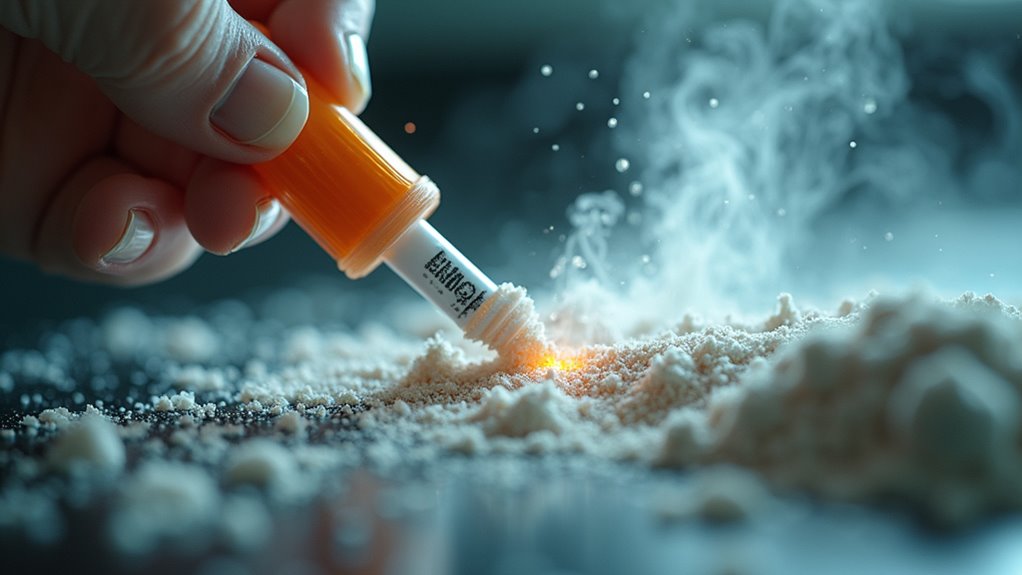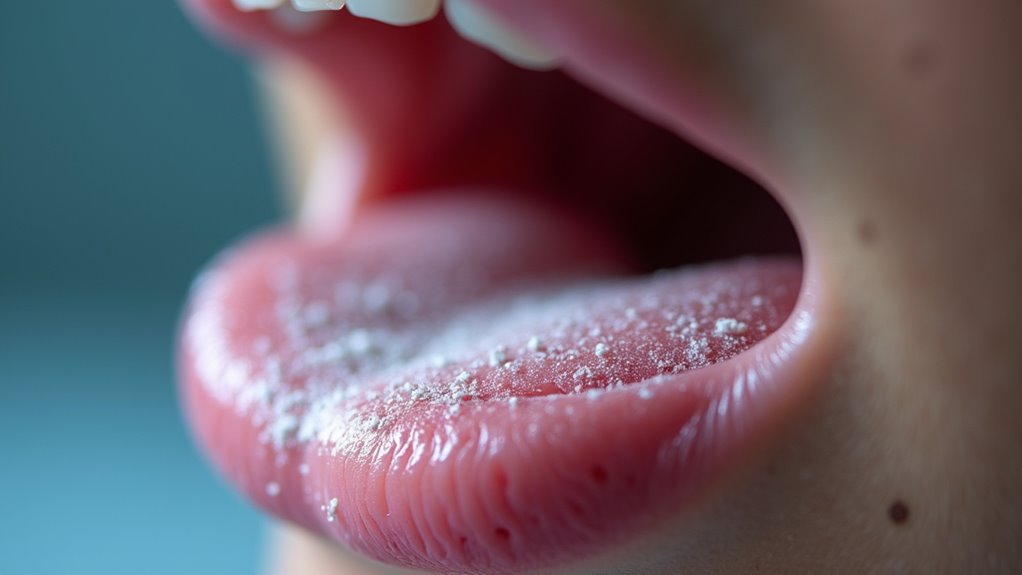
Gumming cocaine means rubbing the powder directly onto your gums, where oral blood vessels absorb it within one to three minutes. You might notice numbness and assume it signals purity or safety. It doesn’t. That numbing masks real harm. Cocaine constricts blood vessels, starving gum tissue of oxygen and causing ulcers, recession, and even palate damage. Overdose and cardiovascular risks stay just as serious. Understanding what’s really happening in your mouth changes everything.
Key Takeaways
- People gum cocaine by rubbing the powder directly onto their gums, absorbing it through the mouth’s blood vessels within one to three minutes.
- Users often seek the numbing sensation, believing it signals potency or delivers a quicker, more intense high than snorting.
- The numbness masks ongoing harm, as cocaine constricts gum blood vessels and reduces oxygen, causing irritation, ulcers, and tissue necrosis.
- Long-term gumming causes gingival recession, tooth decay, enamel erosion, and in severe cases, perforation of the palate.
- Fatal overdose, heart attacks, and strokes remain possible, with risks worsened by contaminants or mixing cocaine with alcohol.
What does gumming cocaine refer to

Gumming cocaine refers to a method of use where the powder is placed directly on the gums, allowing it to absorb through the oral mucosa. From there, the substance enters your bloodstream through the extensive network of blood vessels lining your mouth. You might hear this practice called “gumming” or, less commonly, “eating” cocaine.
This approach works because your gingival tissue shares a similar architecture and vascularization with nasal mucosa, which is why some people apply the drug this way. The absorption happens rapidly, comparable to snorting, with effects typically beginning within one to three minutes.
If you or someone you care about uses cocaine this way, understanding how it works is an important first step toward recognizing the risks involved.
Why people turn to oral use
People choose to rub cocaine on their gums rather than use it another way often because they’re seeking the numbing sensation, which mimics the feeling of a dental injection and signals to them that the drug is active. Many people use this method to test purity or strength, judging potency by how intense the numbness feels. You might also turn to gumming because you believe it delivers a quicker, more intense high than snorting or swallowing, expecting enhanced euphoria from rapid absorption into your bloodstream. Sometimes it’s simply practical: you’re using small amounts of powder left on a surface after insufflation. Understanding these motivations matters, but it’s worth knowing that the numbing you feel can create a false sense of safety about the drug’s real risks.
Why gumming is not a safe or harm-free method

Gumming is not a safe or harm-free method because it inflicts real harm on your body even as the numbing sensation feels reassuring. That “numby” feeling doesn’t signal safety, it signals that cocaine’s already constricting the blood vessels in your gums, cutting off oxygen to the tissue. Over time, that sustained vasoconstriction causes irritation, ulcers, lesions, and even tissue necrosis. You may notice bleeding gums, receding gingiva, tooth decay, and eroding enamel. Contaminants make things worse. Dealers often cut cocaine with lidocaine, procaine, or novocaine to mimic the numbness, and high doses of these agents can trigger seizures, convulsions, or cardiac arrest. A fatal overdose can happen when you gum cocaine, just as with any other route. Sharing surfaces or equipment also raises your risk of HIV and hepatitis C.
What oral and dental damage does gumming cause
Gumming cocaine causes numbness, irritation, gingival recession, ulcers, tissue necrosis, and can progress to perforation of the palate. When you rub cocaine on your gums, you’re triggering vasoconstriction that tightens blood vessels and cuts oxygen delivery to the tissue. At first, you feel numbness and irritation. Over time, that reduced blood flow starves your gums, causing recession, ulcers, and even tissue necrosis.
| Timeframe | What Happens | Effect on You |
|---|---|---|
| Immediate | Numbness, irritation | Heightened sensitivity |
| Short-term | Vasoconstriction | Reduced oxygen to gums |
| Ongoing | Ulcers, lesions | Bleeding, tissue damage |
| Long-term | Gingival recession | Tooth decay, erosion |
Severe cases can progress to perforation of the palate. One study found over 65% of patients showed gingival disease. Your mouth pays a steep, lasting price.
How the numbing effect hides ongoing harm

The numbing sensation hides ongoing harm by masking the pain that would normally warn you something’s wrong. Behind that numbing sensation, real damage keeps building without your awareness. When you rub cocaine on your gums, the anesthetic effect creates a false sense of safety, but it’s actually hiding the drug’s harm.
You feel nothing, yet cocaine’s acting as a powerful vasoconstrictor, tightening blood vessels and cutting oxygen to your gum tissue. This reduced blood flow leads to irritation, ulcers, and even tissue necrosis, all happening silently beneath the numbness.
Because you can’t feel the damage, you might keep applying more, mistaking the intense numbing for potency or purity. Over time, this cycle drives gingival recession, lesions, and erosion you won’t notice until it’s serious.
What overdose and cardiovascular risks remain
Gumming cocaine carries serious overdose and cardiovascular risks, including fatal overdose, heart attacks, and strokes. A fatal overdose can happen when you gum cocaine, no matter how careful you feel about the amount. Because cocaine’s a powerful stimulant, taking too much can trigger panic attacks, heart attacks, and strokes. The danger grows when you don’t know what you’re actually taking. Dealers often cut cocaine with anesthetics like lidocaine, procaine, or novocaine to mimic that numbing sensation. High doses of lidocaine alone can cause cardiac arrest, and it’s been linked to recent cocaine-related deaths. Combining these cutting agents with cocaine increases toxicity, leading to convulsions, seizures, and acute toxicity. If you mix cocaine with alcohol or other substances, your risk of a fatal interaction rises markedly.
How Florida Sober Living Homes helps people stop using and find treatment
Florida Sober Living Homes helps people stop using cocaine by connecting them with the support and treatment they need. You don’t have to navigate recovery alone. When you reach out, you’ll connect with resources designed to address both the physical and psychological aspects of cocaine dependence.
You’ll receive guidance toward evidence-based treatment options, including medically supervised detox, behavioral therapy, and structured aftercare. These approaches help you manage cravings, understand triggers, and build sustainable coping strategies.
Sober living environments offer you a stable, substance-free space where you can focus on healing. You’ll gain peer support, accountability, and access to professionals who understand addiction.
Taking the first step matters. If you’re struggling with cocaine use, help is available, and recovery is possible.
Find Support for Cocaine Use and Recovery
Gumming cocaine may seem less dangerous than other methods, but it still exposes the body to serious risks and can reinforce continued cocaine misuse. Florida Sober Living Homes connects people with sober living and recovery coaching and monitoring to address cocaine use, triggers, and relapse risks. For confidential treatment referrals, contact the SAMHSA National Helpline at 1-800-662-HELP (4357).
Frequently Asked Questions
How Long Does Cocaine Stay Detectable in Your System After Gumming?
After gumming cocaine, you’ll typically test positive for 1 to 4 days, though it can linger for weeks in some people. Your detection window depends on factors like how much you’ve used, how often, your metabolism, and which test you’re facing. If you’re worried about testing or your cocaine use, that’s completely understandable. Reaching out to a healthcare provider can give you accurate, personalized guidance and support without judgment.
Can Gumming Cocaine Cause Bloodborne Infections Like HIV or Hepatitis C?
Yes, gumming cocaine can expose you to bloodborne infections like HIV and hepatitis C. If your gums are irritated, ulcerated, or bleeding, which cocaine’s vasoconstriction and tissue damage make likely, sharing equipment or contact with infected blood raises your risk. You might not realize the numbing sensation masks open sores that create entry points. Avoiding shared surfaces or tools and caring for your oral health can help reduce this danger.
How Long Does a High From Gumming Cocaine Last?
When you gum cocaine, your high typically lasts about 15 to 30 minutes, mirroring the timeline you’d experience from snorting. You’ll notice effects begin within 1 to 3 minutes because the drug absorbs rapidly through your oral mucosa. While the cocaine itself clears fairly quickly, it stays detectable in your system for 1 to 4 days, sometimes weeks. If you’re struggling with use, please know support’s available.
Does Gumming Cocaine Cause Hallucinations With Long-Term Use?
Yes, long-term use can cause hallucinations. When you gum cocaine repeatedly, you’re at risk of experiencing auditory and tactile hallucinations. You might hear sounds or feel sensations that aren’t really there. This happens because sustained cocaine use affects how your brain processes sensory information. Alongside hallucinations, you may also face panic attacks and other serious effects. If you’re noticing these symptoms, please reach out to a healthcare provider for support.
What Common Cutting Agents Do Dealers Mix Into Cocaine?
Dealers often cut cocaine with cheaper anesthetics like lidocaine, procaine, or novocaine to mimic the numbing sensation you’d expect from pure cocaine. These agents fool you into believing the powder’s stronger than it actually is. Unfortunately, they carry serious risks. High doses of lidocaine alone can trigger cardiac arrest, and combining these cutting agents with cocaine increases toxicity, potentially causing convulsions, seizures, and acute reactions that threaten your life.