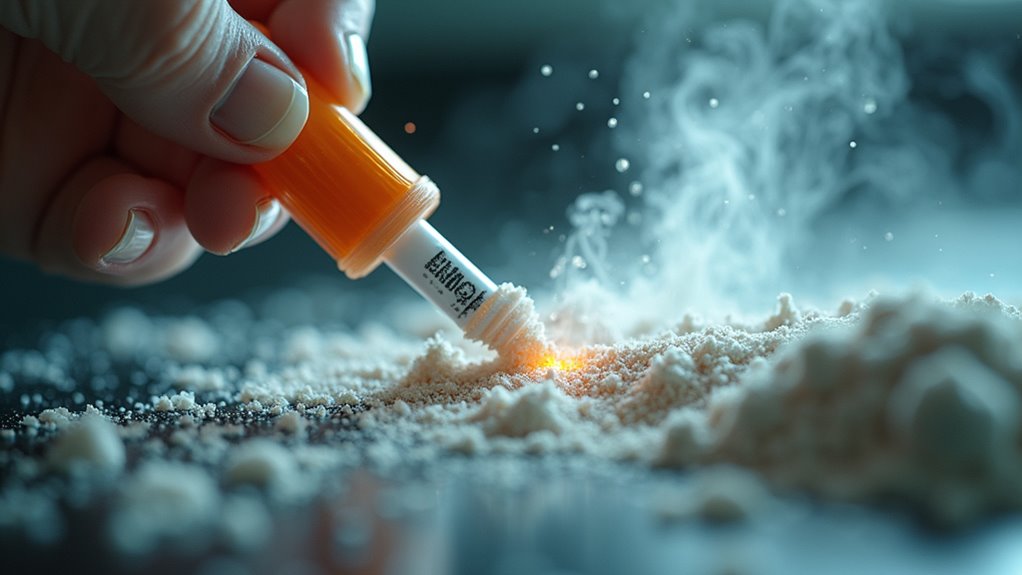
When you inject Xanax, you’re sending the drug straight into your bloodstream, which sharply raises your overdose risk. The pill’s fillers and binders aren’t meant for your veins, so undissolved particles can lodge in narrow vessels, blocking blood flow and damaging tissue. You also risk collapsed veins, infections, and abscesses. Combined with opioids, your breathing can slow dangerously, leading to respiratory failure or death. Understanding exactly how these risks unfold can help you protect yourself.
Key Takeaways
- Injecting delivers Xanax rapidly into the bloodstream, dramatically increasing the risk of fatal overdose, profound sedation, and respiratory failure.
- Xanax pills contain insoluble fillers and binders that leave solid particles when crushed and mixed for injection.
- These undissolved particles can lodge in narrow vessels, causing embolization, tissue death, stroke, heart attack, or limb ischemia.
- Repeated injections and poor sterilization cause vein collapse, scarring, infections, and abscesses that may require surgery or amputation.
- Combining injected Xanax with opioids or other depressants multiplies respiratory suppression, risking fatal breathing failure and circulatory complications.
What are the specific health risks of injecting Xanax

Injecting Xanax exposes your body to a cascade of serious health risks that oral use simply doesn’t carry. Because the drug floods your bloodstream instantly, you face an exponentially higher chance of fatal overdose, profound sedation, and respiratory depression, especially if you combine it with opioids or other depressants. Xanax doesn’t dissolve well in water, so undissolved particles can block your vessels, triggering strokes, heart attacks, and acute limb ischemia. You also risk deep vein thrombosis, collapsed veins, and endocarditis. Shared or unsterile needles expose you to HIV, hepatitis B and C, abscesses, and systemic infections that may require surgery or amputation. Injection also accelerates tolerance and dependence, deepening addiction faster than tablets ever would. You deserve safer options.
Why pills contain fillers and binders never meant for veins
Pills contain fillers and binders because they’re designed to be swallowed, not injected. Your digestive system can process the fillers and binders that hold a tablet together, but your veins can’t. Xanax isn’t very soluble in water, so when you crush a pill and mix it with liquid, it doesn’t fully dissolve. You’re left injecting solid particles directly into your bloodstream.
Crushed pills do not fully dissolve. Injecting them can send solid particles into veins and blood vessels that are not designed to handle them.
Those undissolved particles cause serious harm:
- Blocking blood vessels, triggering stroke or heart attack
- Cutting off circulation to fingers and toes
- Causing embolization and dangerous vessel closure
- Forming clots that lead to thrombosis
- Damaging veins and creating permanent scarring
These aren’t rare complications. They’re predictable consequences of injecting something never meant for your veins.
How injected fillers can block blood vessels and damage tissue
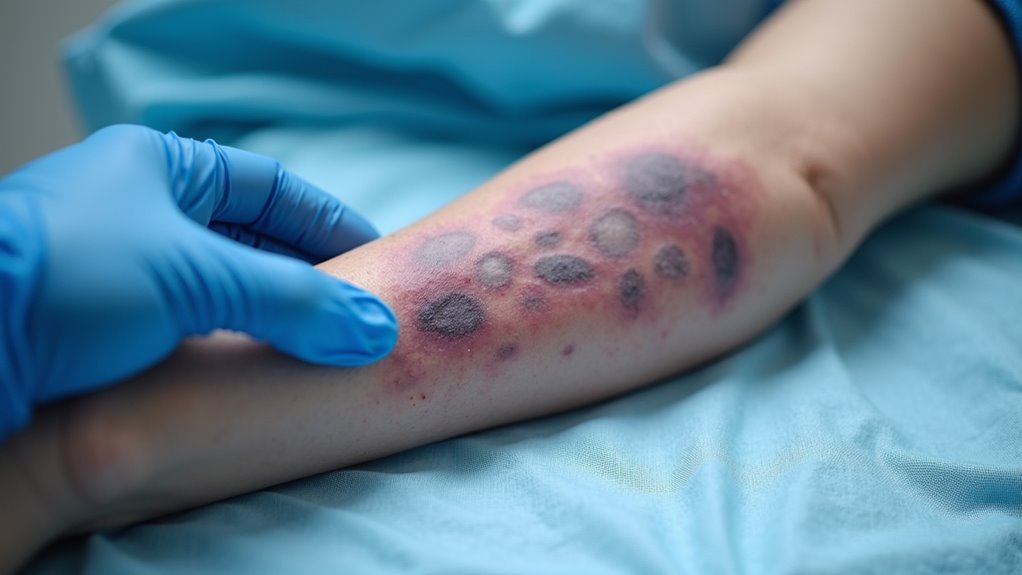
Injected fillers can block blood vessels because undissolved particles enter your bloodstream, travel until they hit a vessel too narrow to pass through, and there they lodge and block the flow of blood. This is embolization, and it’s dangerous. When particles obstruct a vessel, the tissue beyond it loses its blood supply. In your fingers and toes, that can mean acute limb ischemia. In your brain or heart, it can trigger a stroke or heart attack. Xanax simply isn’t very soluble in water, so crushed pills never fully dissolve, no matter how carefully you prepare them. The leftover particulate matter also damages vessel walls, causing inflammation and thrombosis, where clots form and further obstruct circulation. Over time, this repeated damage can permanently scar your veins and destroy surrounding tissue.
What vein damage, infection, and abscess risks come with it
Vein damage, infection, and abscess formation are serious risks of injection. Every time you pierce a vein with a needle, you inflame and swell the surrounding tissue, and repeated injections in the same spot cause your veins to fail and collapse completely. Once a vein collapses, blood can’t flow through it, and permanent scarring follows. Poor sterilization introduces bacteria into your body, seeding infections at the injection site that can spread systemically. Abscesses, painful, pus-filled pockets, form beneath your skin, sometimes requiring surgical drainage or, in severe cases, amputation.
| Risk | Consequence |
|---|---|
| Collapsed veins | Permanent scarring, obstructed blood flow |
| Bacterial infection | Systemic spread, surgical intervention |
| Abscess formation | Tissue destruction, possible amputation |
You’re also exposed to bloodborne pathogens like HIV and Hepatitis C, especially when sharing needles, threatening your long-term health.
How injection increases overdose and respiratory depression risk
Injection increases overdose and respiratory depression risk because rapid entry causes profound sedation, collapse, and respiratory depression.
- Instant brain flooding lets large doses take effect before you can respond.
- Combining injection with opioids or other depressants dangerously slows your breathing.
- Slowed breathing can progress to respiratory failure and death.
- Injection has been linked to rhabdomyolysis and fatal circulatory complications.
You’re facing serious, often irreversible harm with every injection.
Why benzodiazepine-opioid combinations are especially deadly
Benzodiazepine-opioid combinations are especially deadly because they stack two central nervous system depressants that suppress breathing through different pathways. Xanax enhances GABA activity, slowing brain signals, while opioids act on receptors that directly blunt your respiratory drive. Together, they don’t just add up, they multiply, driving your breathing dangerously slow. Injecting Xanax intensifies this danger, flooding your bloodstream instantly and triggering profound sedation before you recognize the warning signs. Your body loses its urge to breathe, and respiratory depression can silently progress to death. If you’re using both substances, understand that the risk isn’t theoretical, combined overdose is one of the most common causes of benzodiazepine-related fatalities. Recognizing this danger is an important step toward protecting yourself and seeking help.
How Florida Sober Living Homes helps people stop and recover
Florida Sober Living Homes helps people stop and recover by offering structured support designed to help you stop safely and rebuild your health. If you’re struggling with benzodiazepine dependence, you’ll need medical supervision, not willpower alone, because abrupt benzodiazepine withdrawal can trigger seizures and serious complications.
Here’s how they support your recovery:
- Connecting you with medically supervised detox to manage withdrawal safely
- Providing a stable, substance-free living environment that reduces relapse triggers
- Offering peer support from others who understand dependence firsthand
- Coordinating counseling and therapy to address underlying causes of use
- Teaching relapse-prevention skills for long-term stability
You don’t have to navigate recovery alone. Reaching out is the first step toward healing.
Frequently Asked Questions
How Long Does Xanax Stay in Your System After Injecting?
You’ll typically clear Xanax (alprazolam) from your system within 4 to 5 days, since its half-life averages around 11 hours. Detection varies by test: urine can show it for up to 5 days, blood for 1 to 6 days, saliva for around 2.5 days, and hair for up to 90 days. Your metabolism, age, liver function, and dosage all affect this. Please don’t hesitate to seek supportive medical guidance.
Is Snorting Xanax Safer Than Injecting It?
Neither method is safe. Snorting Xanax may avoid some of the vascular damage, blood clots, and bloodborne infections associated with injection, but it still carries serious risks. Its rapid effects can increase the risk of dependence, overdose, severe sedation, and respiratory depression, especially when combined with opioids, alcohol, or other depressants. Choosing one method over another does not make misuse safe. If you are using Xanax this way, professional support is available.
What Are the Signs Someone Is Addicted to Xanax?
You’ll notice signs like needing higher doses to feel the same effect, which reflects growing tolerance and dependence. You might see someone using compulsively, struggling to cut back, or experiencing withdrawal when they stop. When they inject Xanax, dependence develops rapidly because the drug floods the brain all at once. Watch for neglected responsibilities, secrecy, and cravings. If you recognize these patterns, reach out for professional support. Recovery is possible.
Can You Safely Detox From Xanax at Home?
Detoxing from Xanax at home isn’t safe. Benzodiazepine withdrawal can trigger life-threatening complications, including seizures, dangerous spikes in blood pressure, and severe psychological distress. You shouldn’t stop abruptly or attempt to taper without medical guidance. Instead, you’ll need a supervised detox where clinicians can monitor your symptoms, adjust your medication, and intervene if emergencies arise. Seeking professional help is not a sign of weakness. It is one of the safest and most effective steps toward recovery.
Does Insurance Cover Xanax Addiction Treatment in Florida?
Yes, most insurance plans in Florida cover Xanax addiction treatment. Under the Affordable Care Act, substance use disorder treatment is considered an essential health benefit, so your plan likely includes detox, inpatient, outpatient, and therapy services. You’ll want to verify your specific coverage by contacting your insurer or the treatment facility directly. Many centers offer free benefit checks to clarify your out-of-pocket costs. Don’t let financial concerns delay getting help.